
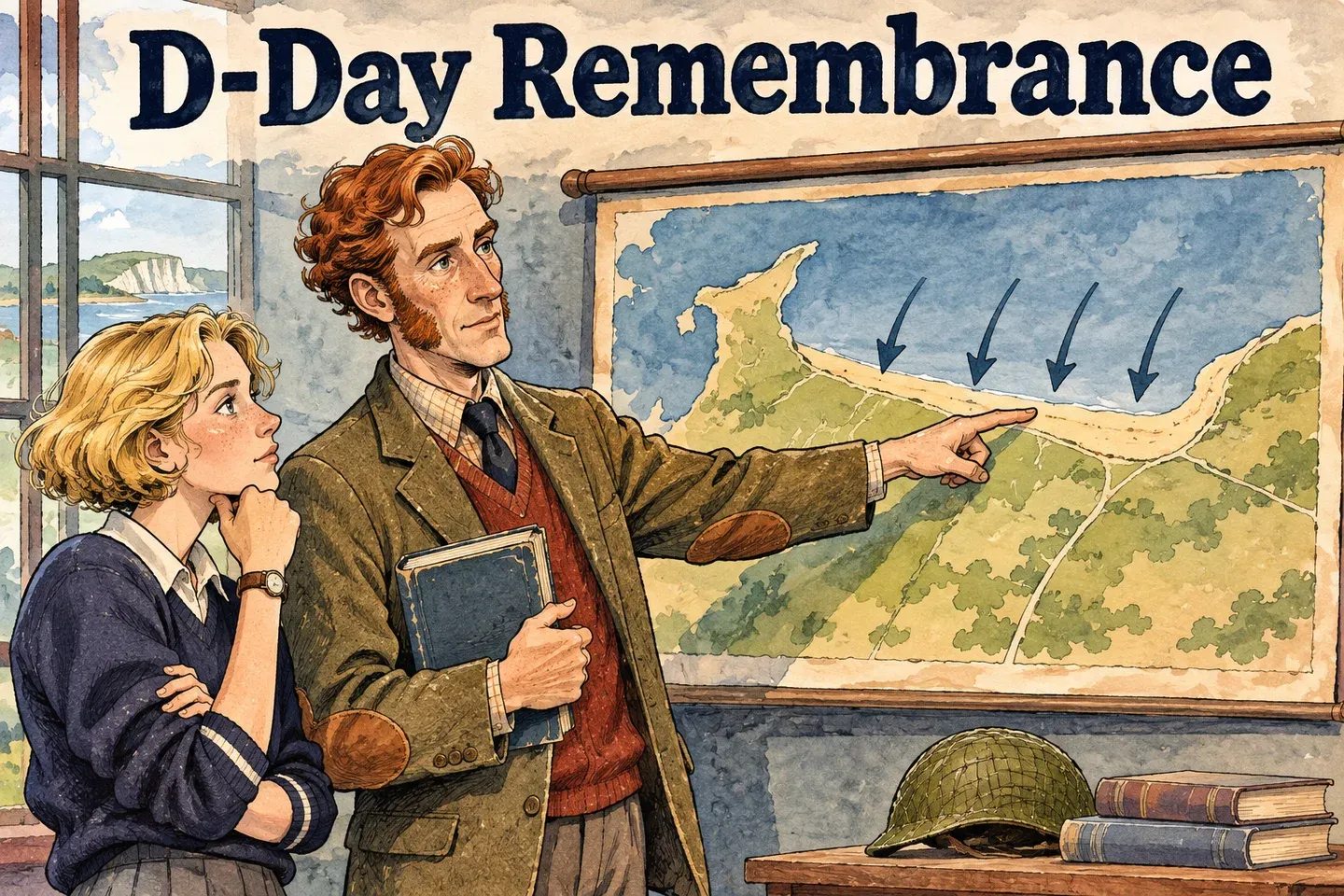
D-Day is remembered on June 6, the anniversary of the Allied landings in Normandy, France, in 1944. The operation brought forces across the English Channel to five landing beaches. Poor weather delayed the planned June 5 start by a day. National WWII Museum’s Normandy guide
A map helps students put a participant’s account in place. For an older class, choose one short account or a carefully captioned photograph before beginning.
Holiday dates for planning
| Observance | 2026 | 2027 | 2028 | 2029 | 2030 |
|---|---|---|---|---|---|
| D-Day anniversary | Saturday, June 6, 2026 | Sunday, June 6, 2027 | Tuesday, June 6, 2028 | Wednesday, June 6, 2029 | Thursday, June 6, 2030 |
D-Day anniversary date reference
Where do you start on the map?
Locate southern England, the English Channel and Normandy. Mark Utah, Omaha, Gold, Juno and Sword using a museum map as the reference. Ask students to describe the route from shore to shore in one sentence.
Put June 6, 1944 at the top of the page. Distinguish that first day from the longer Normandy campaign described in the museum’s guide. Leave room for a later event on the timeline.
What can a photograph add?
Use the museum page’s opening image of U.S. troops approaching the shore. Read its caption and source credit together. Ask students to name three things they can actually see, then write one question the image leaves unanswered.
For a participant’s voice, select and preview an interview from the Library of Congress Veterans History Project. Locate the speaker’s service on the map and have students paraphrase a brief passage with a recording time.
How do students compare their sources?
Fold a page into Place, Visible detail and Remembered detail. Fill the first section from the map, the second from the photograph and the third from the account. End with “What did this person help me understand about the event?”
For another lesson centered on a witness’s perspective, our Pearl Harbor Remembrance Day activity follows an eleven-year-old’s memories of December 7.
Print the activity sheets
Free: D-Day Map and Source Companion Free Sheets - Two free companion pages record map labels and compare a map, photograph and oral-history excerpt.