
On this page
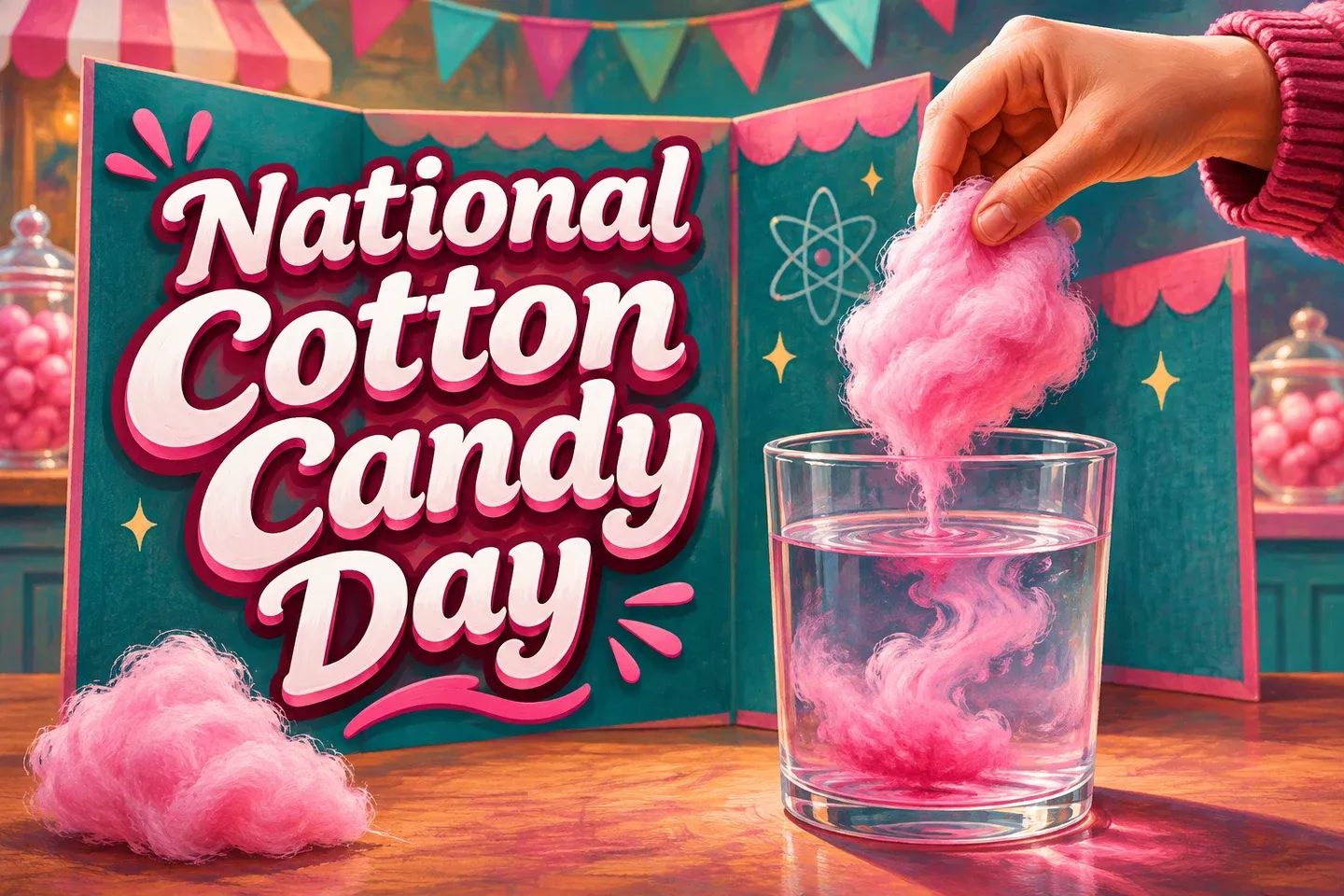
National Cotton Candy Day is December 7. Hold a pinch of cotton candy over a clear glass. As soon as the lowest strands touch water, the fluffy shape begins to vanish. Watching from the side gives you the best view of the color spreading. Ringling’s National Cotton Candy Day feature.
What is cotton candy made of?
Cotton candy is made from thin threads of sugar with a lot of air between them. William Morrison and John Wharton’s 1899 candy-machine patent describes spinning fine threads as the sugar leaves a heated, revolving part of the machine. The masses of little strands explain why a big-looking tuft can feel so light. Morrison and Wharton’s candy-machine patent.
Holiday dates for planning
| Observance | 2026 | 2027 | 2028 | 2029 | 2030 |
|---|---|---|---|---|---|
| National Cotton Candy Day | Monday, December 7, 2026 | Tuesday, December 7, 2027 | Thursday, December 7, 2028 | Friday, December 7, 2029 | Saturday, December 7, 2030 |
National Cotton Candy Day date reference
How do you run the cotton candy and water experiment?
Put two similar tufts of cotton candy on a dry plate. Pour room-temperature water into a clear glass. Use the Cotton Candy Water Experiment sheet to predict what you’ll see.
- Leave one tuft on the plate. Lower the other gently until it touches the surface. Try to keep your hand or spoon out of the way.
- Watch from the side as the threads collapse. Note any trails of color before stirring.
- Stir gently and compare both tufts. The dry one still has its air spaces. In the glass, water surrounds the sugar molecules and the sugar becomes part of the solution. The fluffy shape is gone, while the sugar remains in the water. American Chemical Society’s sugar dissolving lesson.
Can you tell where the sugar went?
Draw the dry tuft, the moment it touched and the glass afterward. If the water turned pink, track where that color moved. Try a fresh tuft with less water and compare the strength of its color. Change one amount at a time so the comparison is easy to follow. For another visible change in clear water, try the floating paper clip experiment.
Inside the printable
Make a prediction, compare a dry tuft with one dunked in water and draw what you saw before, during and after the change.
Print one US Letter page at actual size. For personal or group use.