
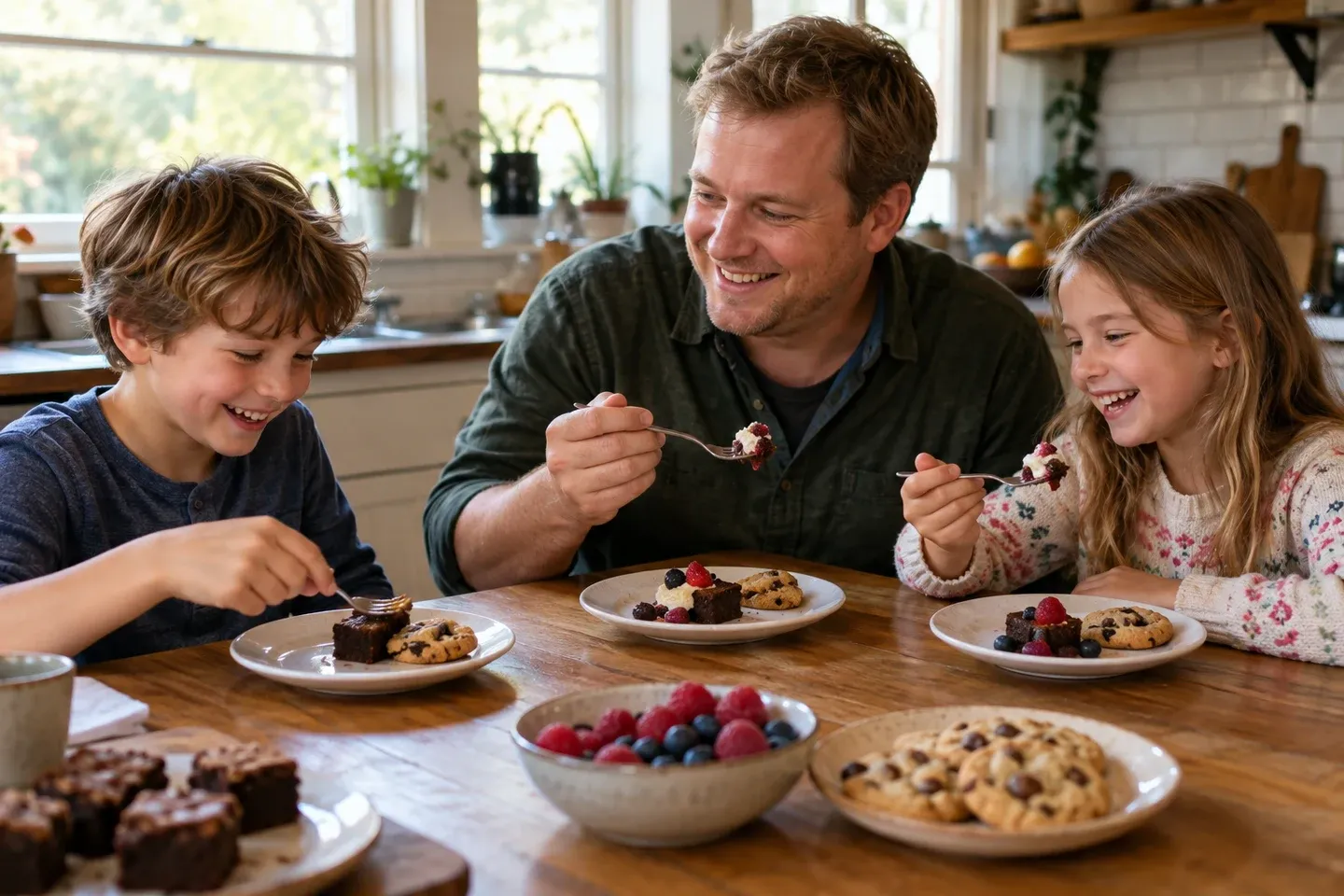
National Dessert Day is October 14, and a small dessert tasting, a decorating table, or a few silly dessert questions can turn it into an easy family celebration. You don’t need to bake six things or turn your kitchen into a bakery. One dessert and something to do together will work just fine.
I like this kind of celebration because you can make it fit the evening you actually have. Pick up a few cookies on the way home, bake something together if there’s time, or let the kids design a dessert that could never fit on a real plate. There are plenty of ways to enjoy the idea without creating another big job for yourself.
When is National Dessert Day?
National Dessert Day falls on October 14 each year. This guide follows the U.S. food observance. Nothing Bundt Cakes recognizes October 14 on its Dessert Day page.
Holiday dates for planning
| Observance | 2026 | 2027 | 2028 | 2029 | 2030 |
|---|---|---|---|---|---|
| National Dessert Day | Wednesday, October 14, 2026 | Thursday, October 14, 2027 | Saturday, October 14, 2028 | Sunday, October 14, 2029 | Monday, October 14, 2030 |
National Dessert Day date reference
Pick the dessert activity that fits your group
Before buying anything, decide what you want people to do. Are you sitting down for a little tasting, letting everyone decorate something, or planning a classroom activity without food? That one decision will keep the supply list under control.
| Activity | What you need | Allow about |
|---|---|---|
| Family dessert tasting | Three small samples per person, plates, water | 15–20 minutes |
| Build your own dessert | One dessert base, a few toppings, serving utensils | 20–30 minutes |
| Cookie decorating | Plain cookies, prepared frosting, a few decorations | 20–30 minutes |
| Dessert Would You Rather | The questions below | 10–15 minutes |
| Dream dessert shop | Paper and crayons | 20–30 minutes |
Those times are planning estimates. For a small gathering, I’d choose one table activity and keep the questions handy for anyone who finishes early. Baking time is separate from decorating time, so have the treats ready before the group arrives.
Host a little family dessert tasting
Choose three desserts with different textures or flavors. A brownie piece, part of a cookie, and a small fruit dessert give people something to compare. You can use what you already have instead of buying three full packages specifically for the activity.
Put a small sample of each dessert on everyone’s plate. Keep the foods recognizable and let people know what they’re trying. This isn’t a blindfold game or an eating contest.
Work through the samples together and ask:
- Which one is the crunchiest?
- Which flavor do you notice first?
- Which would you choose after dinner?
- Which two would you put together in a new dessert?
- What would you name your favorite?
Everyone can describe their own preferences. Someone is allowed to prefer a plain cookie over the dessert that took the longest to make. Try not to take that one personally.
Check ingredients and your group’s food needs before choosing the samples. Keep tasting optional, and have a drawing activity available so that joining the table doesn’t depend on eating the food.
If your family enjoys comparing chocolate flavors, our National Chocolate Day activities have a more focused tasting idea and a trivia round.
Set up a dessert bar without buying the whole baking aisle
Choose one base and three toppings. That’s enough choice to feel like an activity without leaving you with twelve half-used containers afterward.
A few combinations to consider:
- Brownie squares: Prepared frosting, sprinkles, and a fruit topping suited to your group.
- Plain cookies: Two frosting colors and one kind of sprinkle.
- Small bowls of ice cream: A sauce and two toppings, served in small batches from the freezer.
- Fruit cups: Prepared fruit with an optional topping that fits the guests’ needs.
Set out plates first, followed by the base and toppings. Give each topping its own serving utensil. Keep packages available for ingredient checks and use separate portions where your group needs them. Follow the storage directions for the foods you’re serving.
For eight people, start with eight small dessert portions and a little extra of the base. Buy toppings in ordinary small containers rather than assuming every person needs a whole serving of every topping. You can set out more if needed.
Let guests make their dessert, give it a name, and explain their choices. “Chocolate With More Chocolate” is a perfectly acceptable name. Some people know what they like.
Turn cookie decorating into a simple game
Give everyone a plain cookie on their own plate, a portion of frosting, and suitable decorations. Choose one prompt for the first round:
- Make a friendly monster.
- Decorate something that looks like autumn.
- Make a face with a very surprised expression.
- Use two colors to create a pattern.
Allow about ten minutes, then invite everyone to show their cookie. Ask each person to share one thing they like about someone else’s design. There’s no need to rank the cookies from best to worst.
Younger children can spread frosting with a suitable utensil and add decorations. Older children might enjoy working from the same prompt and seeing how different the results look.
Want to make the treats ahead of time? Our Red Velvet Crinkles recipe is another baking option. Those cookies already have their own powdered sugar finish, so serve them as tasting samples rather than treating them as plain decorating cookies.
Play Dessert Would You Rather
Read one question at a time. Have people point to the left for the first choice and the right for the second, or simply say their answer. Let a few people explain before moving on.
- Would you rather have a brownie with a crunchy edge or a soft center?
- Would you rather decorate cupcakes or build ice cream sundaes?
- Would you rather try a new dessert or have your favorite again?
- Would you rather have cookies straight from the bakery or bake them together?
- Would you rather design a dessert shaped like a pumpkin or a smiling monster?
- Would you rather choose the frosting flavor or the decorations?
- Would you rather open a pretend pie shop or a pretend cookie shop?
- Would you rather name a dessert after your pet or your favorite place?
For a classroom, keep everyone seated and use hand signals. At home, the questions can fill a few minutes while plates are being cleared. No printing or extra supplies are needed.
Make a dream dessert shop with paper and crayons
This works well when food isn’t part of the plan. Give each person a sheet of paper and ask them to draw a dessert for a pretend shop. It can be realistic or completely ridiculous. A cookie the size of a bicycle is fair game on paper.
Ask them to add:
- A name for the dessert.
- The flavors or ingredients they imagine.
- A drawing of the finished creation.
- One sentence explaining why someone should try it.
Pair people up and let them take turns being the shopkeeper and customer. The customer asks a question, and the shopkeeper explains the design. Then switch roles.
Younger children can describe their ideas aloud while an adult writes the name. A larger group can arrange the pages into a pretend shop window. Keep the imaginary ingredients on the page; this is a drawing and conversation activity, not a recipe challenge.
Make room for a family recipe story
If your family has a dessert recipe someone would like to share, ask about it while you eat. Who makes it? When do you usually have it? Has anybody changed an ingredient or learned a helpful trick?
Write down the recipe as the contributor gives it to you, including any details they think are easy to miss. Ask before sharing someone else’s recipe publicly. If there isn’t a family recipe to pass along, let each person choose a dessert they’d like to learn to make another time.
For a short evening, I’d keep the plan to a small tasting and a few questions. If you have more time, add decorating or the pretend dessert shop. Leave enough room to sit down with everyone. The host should get to enjoy Dessert Day too.