
On this page
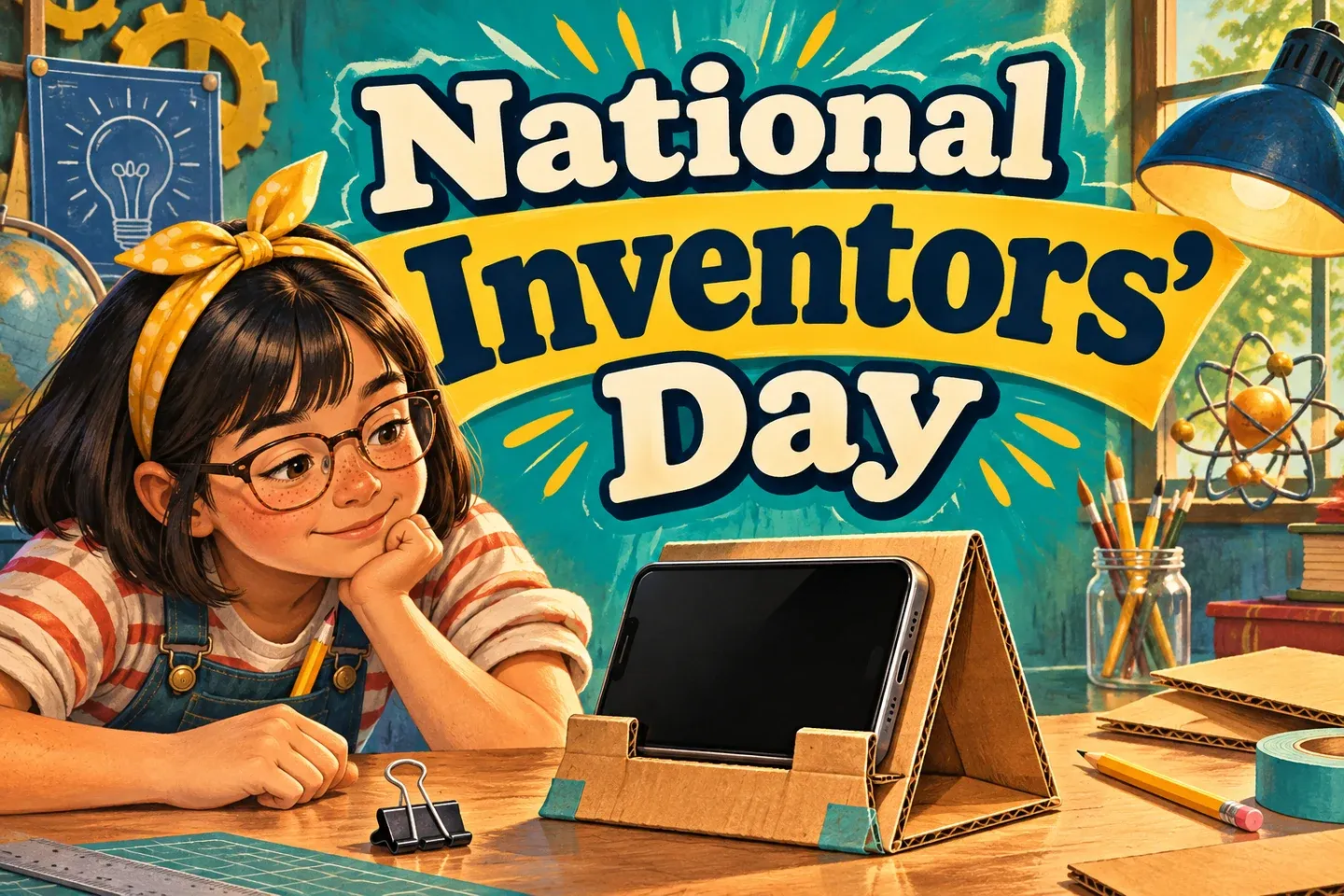
National Inventors’ Day is February 11, the birthday of Thomas Edison. It celebrates the people who see an everyday nuisance and decide to build something about it. Here’s one for the kitchen table. Your pretend phone keeps falling flat, and you need to see its screen while both hands are busy. Can five things from a drawer hold it up?
Why do we celebrate inventors on February 11?
In 1983, President Ronald Reagan issued a proclamation recognizing inventors on the anniversary of Edison’s birth. Read the original National Inventors’ Day proclamation. The National Inventors Hall of Fame still marks the day, and its guide to prototypes describes a step kids can try right now. Make a rough version early enough that you can learn from it.
Holiday dates for planning
| Observance | 2026 | 2027 | 2028 | 2029 | 2030 |
|---|---|---|---|---|---|
| National Inventors’ Day | Wednesday, February 11, 2026 | Thursday, February 11, 2027 | Friday, February 11, 2028 | Sunday, February 11, 2029 | Monday, February 11, 2030 |
National Inventors’ Day date reference
What can you invent with five ordinary supplies?
Set out one rectangle of cereal-box cardboard, one binder clip, one rubber band, one craft stick and one 6-inch strip of masking tape. Those are the five building materials. Scissors, a pencil, the timer and the phone-shaped test card are tools. Cut out the card from the Five-Item Inventor’s Notebook and use it in place of anyone’s actual phone. A paper model makes a tipped-over test easy to reset.
Draw a screen on the blank front of the card and leave the printed star near its bottom edge visible. Your stand has two jobs. It must hold the card upright in landscape position for ten seconds after you take your hands away, and the star must still be visible.
What should you try when your first design falls over?
Make a side-view sketch before touching the materials. Where will the bottom edge of the card stop? What will keep the back from falling flat? If everyone is stuck, show one starting move. Fold the cardboard like a tent and see what happens when you lean the card against it. Leave the rest of the solution to the builders.
Start the timer only once the builder lets go. A partner can watch the star while the builder watches the base. When a stand gives way, describe the first thing that moved. “The card slid forward” suggests a different repair from “the whole stand fell backward.” Change one feature, sketch it and repeat the same ten-second test.
Give the finished stand a name and fill out the invention label. Invite another person to use it using just the inventor’s directions. Even a stand that passes both tests can teach you something when a new user puts the card in backward. For another build with a clear finish line, try the spaghetti-and-marshmallow tower challenge.
Inside the printable
Use the design page to sketch a stand, observe two ten-second tests and record a change. Cut out the landscape phone from the second page, draw its screen and complete an exhibit label for your finished invention.
Print two US Letter pages at actual size. For personal or group use.