
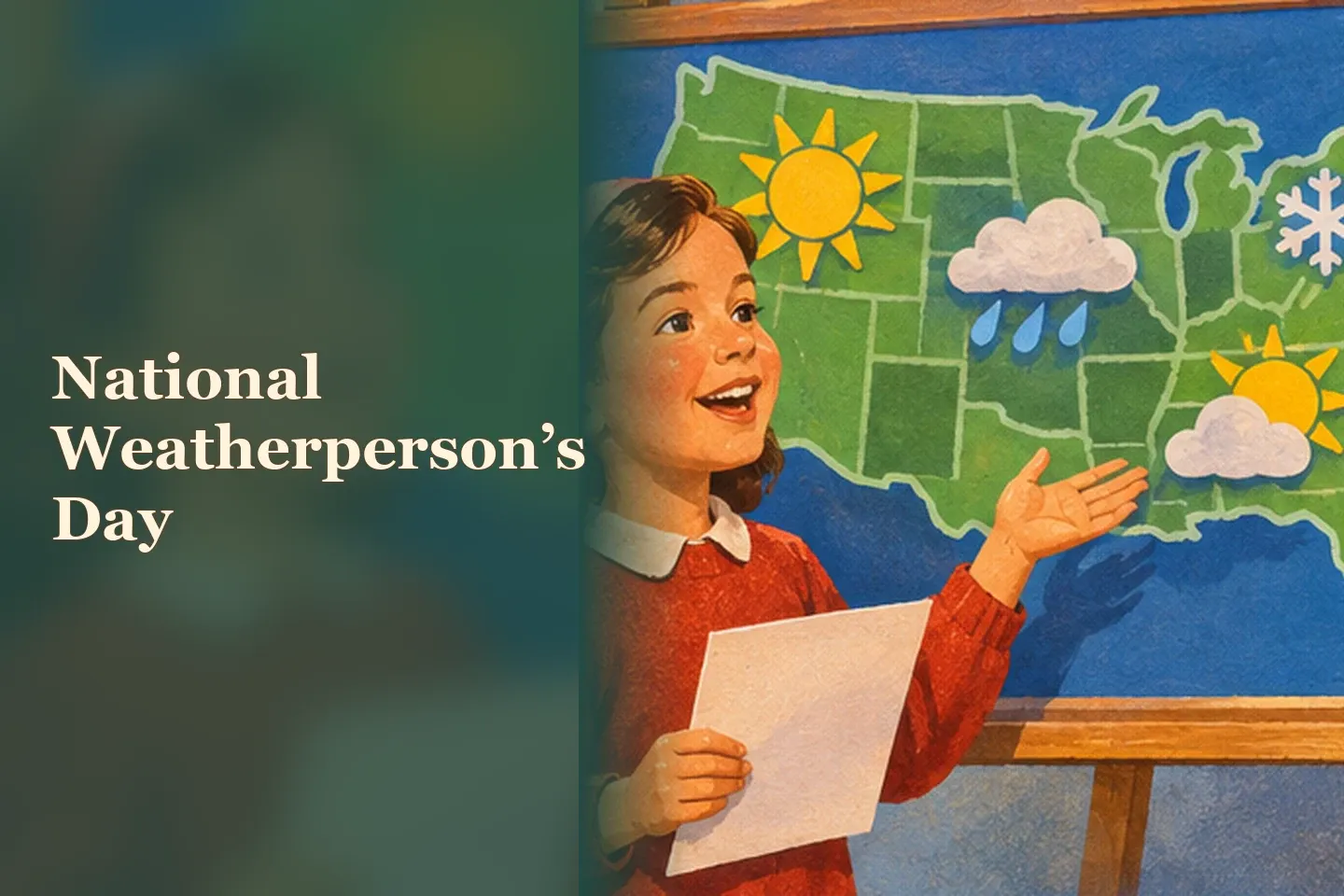
National Weatherperson’s Day falls on February 5. It recognizes the people who observe, forecast and communicate the weather, from volunteer observers to meteorologists at the National Weather Service.
Holiday dates for planning
| Observance | 2026 | 2027 | 2028 | 2029 | 2030 |
|---|---|---|---|---|---|
| National Weatherperson’s Day | Thursday, February 5, 2026 | Friday, February 5, 2027 | Saturday, February 5, 2028 | Monday, February 5, 2029 | Tuesday, February 5, 2030 |
National Weatherperson’s Day date reference
Why February 5?
The date is the birthday of John Jeffries, born in 1744. He kept weather observations and later carried instruments aloft on a balloon flight. His story makes a good starting question: what can a person learn up high that they might miss at ground level?
How do kids present a one-minute forecast?
Draw a simple local map. Mark your home and one familiar landmark. Draw a sun, cloud and raindrop on separate scraps. Start the broadcast with what you see outside, then use the current local forecast for what comes next. Finish with one useful detail, such as when to pack a raincoat. Switch presenters and compare how clearly each one distinguished an observation from a prediction.
Related reading: U.S. Air Force Reserve Birthday.
Print the Junior Weather Desk Activity Pack. Use the first page for the pencil activity, then let each student choose a coloring page. Print any page separately on US Letter paper.
Inside the printable
Read a school weather log, graph three temperatures and write a recess forecast. Includes five weather coloring pages. Print one pencil worksheet per student and choose any of the five coloring pages for early finishers or a class display. Each page prints independently on US Letter paper. Read the companion article.