
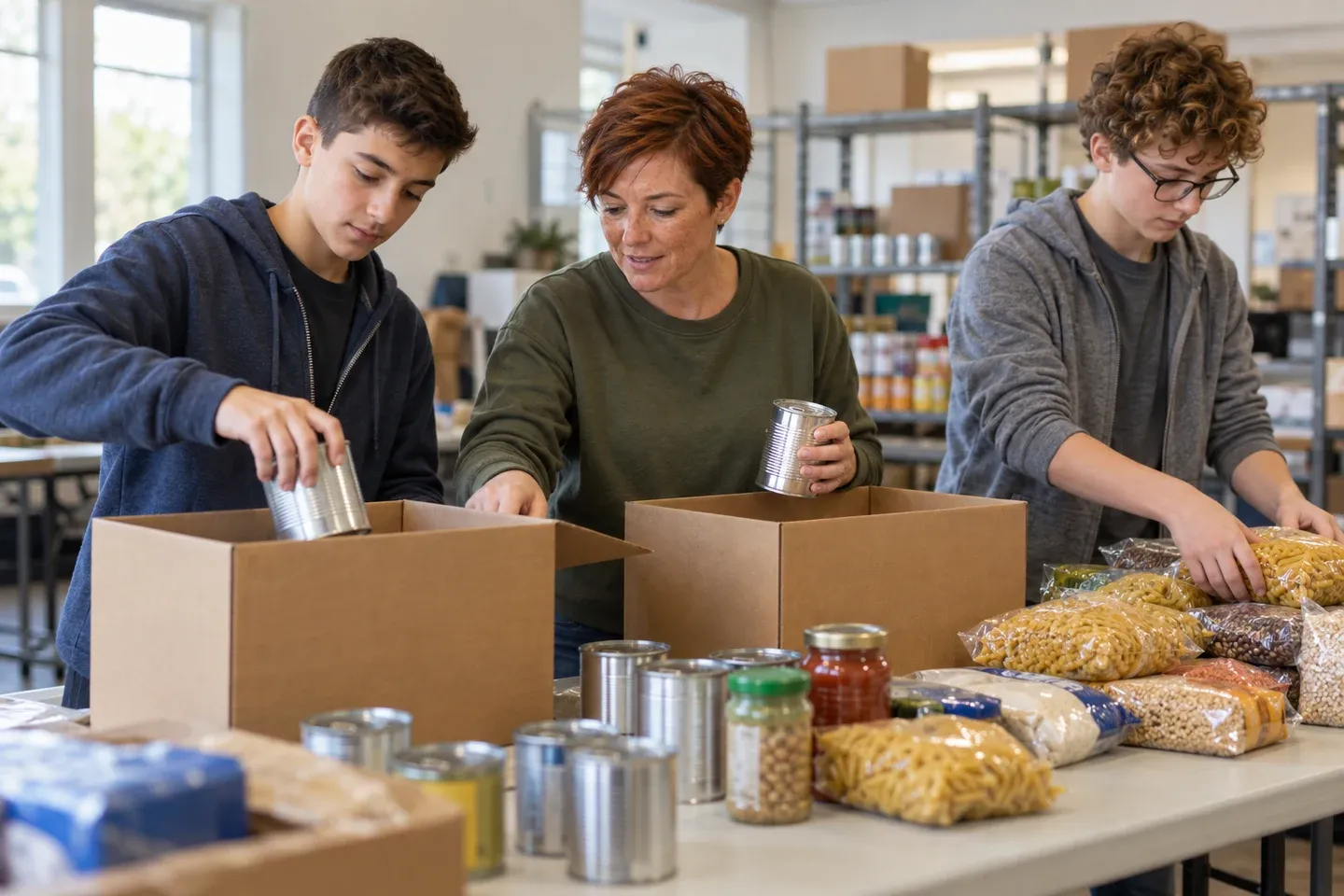
Make a Difference Day falls on the fourth Saturday in October. A useful way to take part is to choose one need, ask what’s actually helpful, and finish a manageable project together. Families, classrooms, and church groups can collect requested supplies, help with an agreed cleanup, or offer practical help to a neighbor.
I’d start smaller than you think you need to. A project that gets finished and delivered is more useful than an ambitious plan that leaves boxes sitting in the hallway for three weeks. You don’t need a big event to do something worthwhile.
When is Make a Difference Day?
Points of Light describes the recurring observance as the fourth Saturday in October. Youth Service America lists the current event date and offers project ideas and volunteering resources.
This guide follows the U.S. day of community service. Local volunteer events can have their own schedules, so check the time and arrangements with the organization you’re helping.
Holiday dates for planning
| Observance | 2026 | 2027 | 2028 | 2029 | 2030 |
|---|---|---|---|---|---|
| Make a Difference Day | Saturday, October 24, 2026 | Saturday, October 23, 2027 | Saturday, October 28, 2028 | Saturday, October 27, 2029 | Saturday, October 26, 2030 |
Make a Difference Day date reference
Ask what’s needed before choosing the project
It’s tempting to start by making something or collecting everything people are willing to give. A short conversation with the recipient first can save everybody work.
Ask a local pantry, shelter, school, community group, or neighbor:
- What would be useful right now?
- Which items or tasks should we avoid?
- How many people can help, and are there age requirements?
- When and where should we bring the items or do the work?
- Who should we contact when we’re ready?
Then choose one clear goal. “Collect the pantry’s three requested items and deliver them on Saturday” is easier to organize than “do something for the community.”
Give one adult responsibility for arrangements and delivery. Children and teenagers can help with the work, but they shouldn’t have to figure out why nobody scheduled the drop-off.
Make a focused food pantry collection
Get the pantry’s current requested item list and donation instructions. Pick two or three items your group can realistically collect. Use those exact names when you ask people to contribute.
For a family, you might add a few requested items to a normal shopping trip. A classroom or church group can collect them over several days, with the collection deadline set before the delivery date.
At the sorting table, give people specific jobs:
- Compare donated items with the pantry’s list.
- Check packaging and dates against its acceptance instructions.
- Group matching items together.
- Count and pack the accepted items as directed.
- Help clear the table and collect empty packaging.
Keep food in its original packaging with labels intact. Let the pantry set the rules about what it can accept rather than trying to make those decisions for it.
Afterward, tell the group what was delivered and where it went. A simple count gives children something concrete to understand without making promises about how many people their donation will feed.
Help a neighbor with one agreed task
Offer a specific job and let the neighbor decide whether it would help. You could rake part of a yard, move empty bins back from the curb, organize an agreed storage area, or help carry a delivery.
Try a question like: “Would it help if we raked the front yard Saturday morning? We can take the leaves to the spot you choose.” That’s easier to answer than a general offer to help with anything.
Agree on the boundaries before starting. Which area needs attention? What should be left alone? Where do supplies belong afterward? Don’t surprise someone by reorganizing their belongings or cutting back plants they wanted to keep.
Choose jobs that fit the ages and abilities of your helpers. Younger children might gather leaves with an adult or carry light supplies. Older children can work in pairs on the agreed task. Have the adult check the finished area with the neighbor before everyone heads home.
Plan a small cleanup you can finish
Choose a defined area, such as an approved section of a schoolyard or community space. Get permission from the person responsible for it and confirm how collected waste will be handled.
Walk the area with an adult before the group begins. Set clear boundaries and tell children to leave sharp, unknown, or hazardous items for the responsible adult or site staff. Keep the activity away from traffic and other areas the group can’t safely manage.
Divide the space into small sections and give each pair an assigned area. Have an adult manage supplies and the collection point. Stop while there’s still time to check the area, gather equipment, and put the waste where the site organizer told you to leave it.
If the weather changes, use the time for an indoor project you’ve already agreed with a recipient. Our easy Earth Day activities offer related ideas for caring for shared spaces, but the local site’s needs should guide the actual work.
Collect supplies a shelter has requested
Ask a local animal shelter for its current wish list and donation arrangements. It may need a particular type of food, cleaning item, or other supply. Don’t assume every shelter accepts used bedding, homemade treats, or the same brands.
Let children help read the list, count the items, and pack the donation. Arrange the delivery with staff and follow the shelter’s directions. Meeting or handling animals is a separate activity that needs the shelter’s permission and its own age and supervision arrangements.
If the group wants something to make while the collection is underway, pair it with a paper cat craft from our National Cat Day activities. Keep the craft for your own display unless the shelter has asked for it. A donation box doesn’t need to become a box of extra things staff must find somewhere to put.
Put together notes someone wants to receive
A school staff team, volunteer group, or care facility may welcome a collection of encouraging or appreciative notes. Ask the coordinator first about recipients, message guidelines, and delivery. Some groups have specific instructions, so use those rather than guessing.
Give writers a simple prompt: “Thank you for the way you…” or “Something I appreciate about you is…” Encourage one specific thought instead of a long speech.
Children can add a drawing. An adult can help with spelling without rewriting every message into grown-up language. If the notes are going through an organization, follow its privacy guidance and don’t add contact details or invitations unless requested.
This can work well for a classroom with limited time. Collect the notes, check that they meet the coordinator’s instructions, and assign someone to deliver them. Making them is only the first half of the job.
Give everybody a useful role
Some people enjoy carrying supplies. Others would rather sort, count, draw, or keep track of the list. Offer a few roles so participating doesn’t depend on doing the most physical task.
For a short group session, this is a reasonable starting schedule:
- First ten minutes: Explain who you’re helping, what they’ve requested, and each person’s job.
- Next thirty minutes: Work on the project in pairs or small teams.
- Next ten minutes: Check the result, pack up, and clean the space.
- Last ten minutes: Talk about what was completed and confirm who is handling delivery.
That is a suggested schedule for a simple project, not a promise that every task takes an hour. Arrange travel and drop-off separately, and leave more time for anything that needs it.
Finish with a short conversation
Ask the group what they noticed. Which job was easier than expected? What did the recipient need that you hadn’t thought about? Is there one small thing you could keep doing after today?
Keep any photos focused on your own group and completed work, with permission from the people and organization involved. Helping someone doesn’t require making their personal situation part of a public post.
For more everyday ways to offer help, our Good Samaritan Day ideas are another starting point. You don’t have to wait for a special Saturday to use them.
Choose something useful, agree on the details, and see it through. If the plan is small enough that your group can do it again, that’s worth keeping.